Simone Mao is an award-winning Canadian political theorist and AI governance researcher currently affiliated with Harvard University. Her research areas include political philosophy, the history of political thought, democratic theories, comparative constitutionalism, traditions of pluralism, multiculturalism, AI ethics and governance, globalization, nationalism, ethnicity, and law. Her work bridges normative theory, institutional design, and global governance. She develops pluralist, value-sensitive frameworks for ethical AI alignment and global cooperation, with a focus on reconciling value pluralism across cultures. Her recent research spans three interrelated domains: AI ethical governance, political philosophy and cross-civilizational theory, and institutional and policy design in a global context.
Her work aims to address foundational problems in the history of philosophy and seeks to offer new theoretical contributions. Her research is driven by the fundamental questions: How can people live together harmoniously in plural, heterogeneous, multicultural (multi-ethnic) societies? What philosophical and institutional foundations enable us to recognize diversity and respect difference, and how?
All of her work across diverse fields converges toward a unifying vision: rethinking the philosophical and institutional foundations of human cross-civilizational coexistence in an age of global value fragmentation, rising intelligent machines, and institutional uncertainty and redesign.
Meet Simone Mao
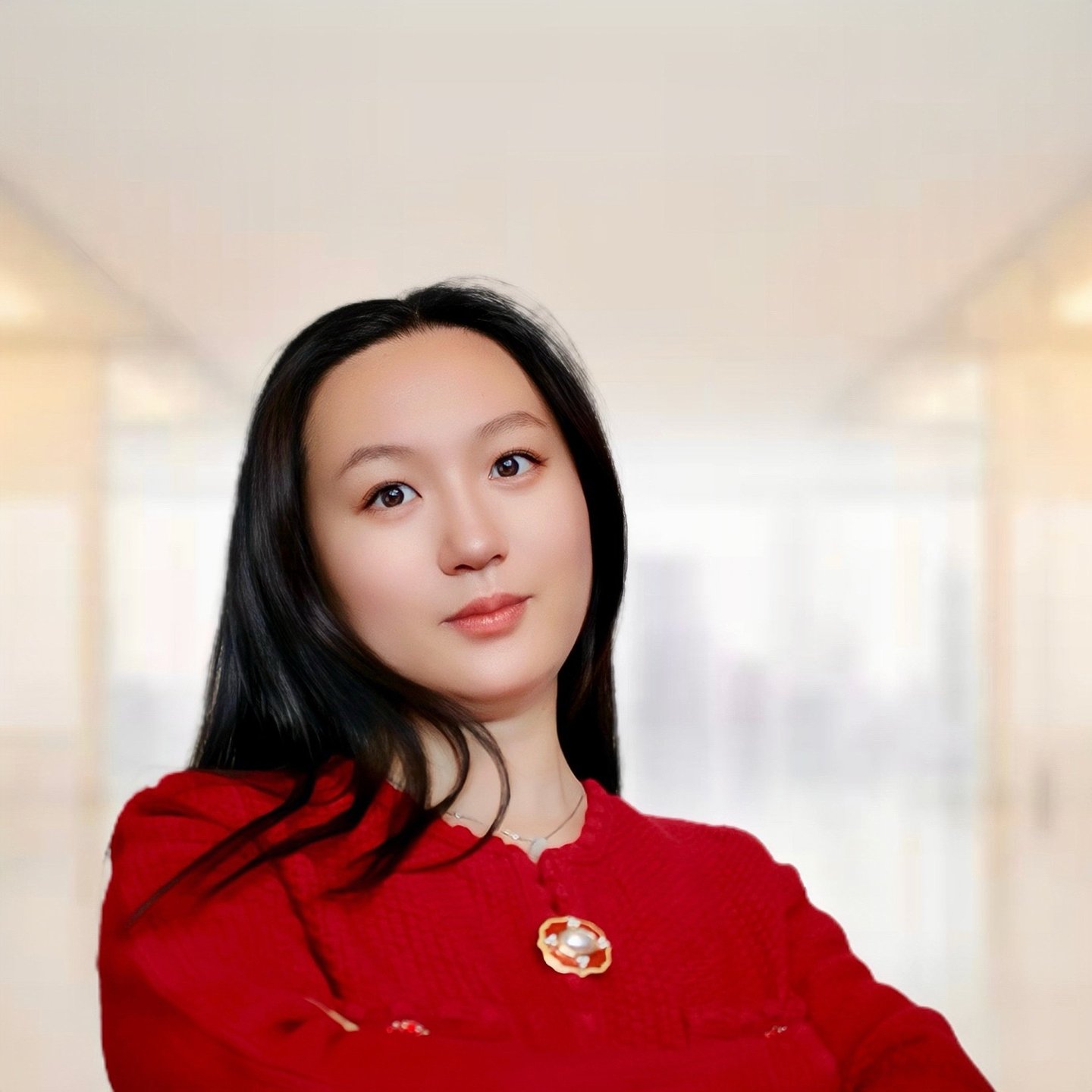
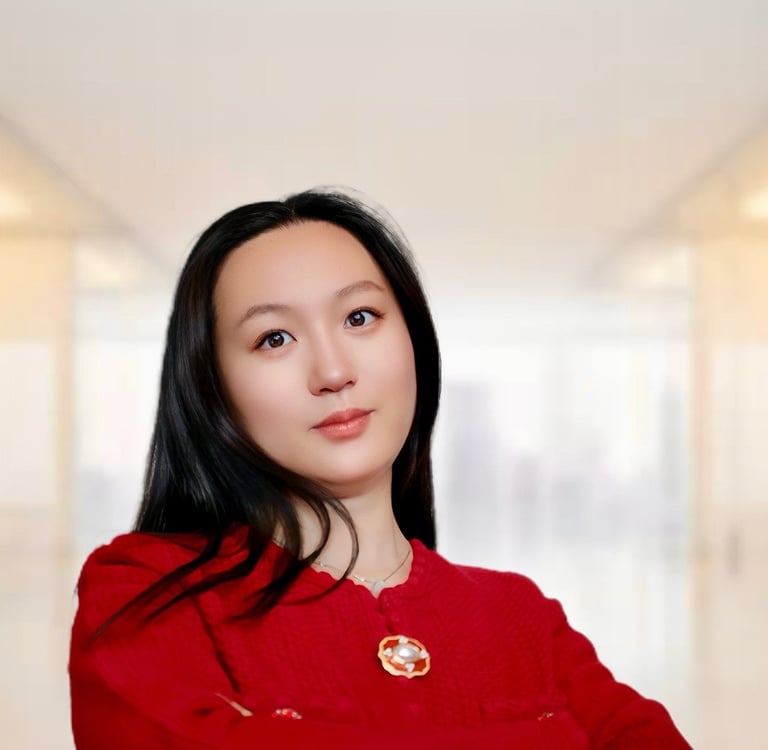


Simone Mao is a Chinese-Canadian researcher, author, philosopher, and advocate for equality and democracy. She was also a serial entrepreneur and poet. She is currently a postgraduate degree candidate in Government and an emerging political theorist at Harvard University, focusing on the theory and history of political thought. She actively contributes to academic and social causes.
Researcher
Simone is pursuing a postgraduate degree in Government at Harvard University, with a focus on political philosophy. After switching between different fields such as economics, philosophy, and classical studies, she graduated from Harvard University with a bachelor's degree in Economics and a minor in Government cum laude. Mao has contributed to scholarly work in research fields including political philosophy, the history of political thought (with particular emphasis on Jean-Jacques Rousseau's theory of the social contract), democratic theories, comparative constitutionalism, traditions of pluralism, multiculturalism, AI ethics and governance, globalization, nationalism, ethnicity, and law.
Recognized as Leader of Tomorrow, Simone Mao is a political theorist who contributes her expertise and insights in political philosophy to global AI governance and ethics. Her past work involved updating the UNESCO 2021 Recommendation on the Ethics of AI, supporting global AI policy, legislation, and institutional design, and helping policymakers embed democratic and pluralistic principles into national AI strategies. Her research helps reshape the global landscape of responsible AI governance and supports the continued evolution of UNESCO's AI for Humanity agenda.
Learn more about Simone's work in political theory and ethical AI governance research.
Apprentice of Philosophers
Before entering Harvard, Simone’s passion for philosophy drove her to study German, French, Italian, Latin, and Ancient Greek. She later traveled to Italy to pursue Classical Studies (Lettere Classiche) with a focus on Ancient Philosophy at the University of Rome "La Sapienza". Her interest in philosophy began at the age of 12; the little Simone said, "To learn is to be a sage."
Author (co-)
Simone co-contributed to the Chinese edition of the Oxford Classical Dictionary and is currently working on her scholarly translation, Methexis: The Platonic Theory of Ideas and the Participation of Empirical Things, a monograph in Italian and Ancient Greek by Francesco Fronterotta (President of Mediterranean Section of International Plato Society).
Advocate
Simone is a strong advocate for democracy, public policy, and gender equity in particular, in academia and the community. She has worked with the Canadian Parliament, NGOs, think tanks, and civil society organizations.
Learn more about Simone's work in public policy and service.
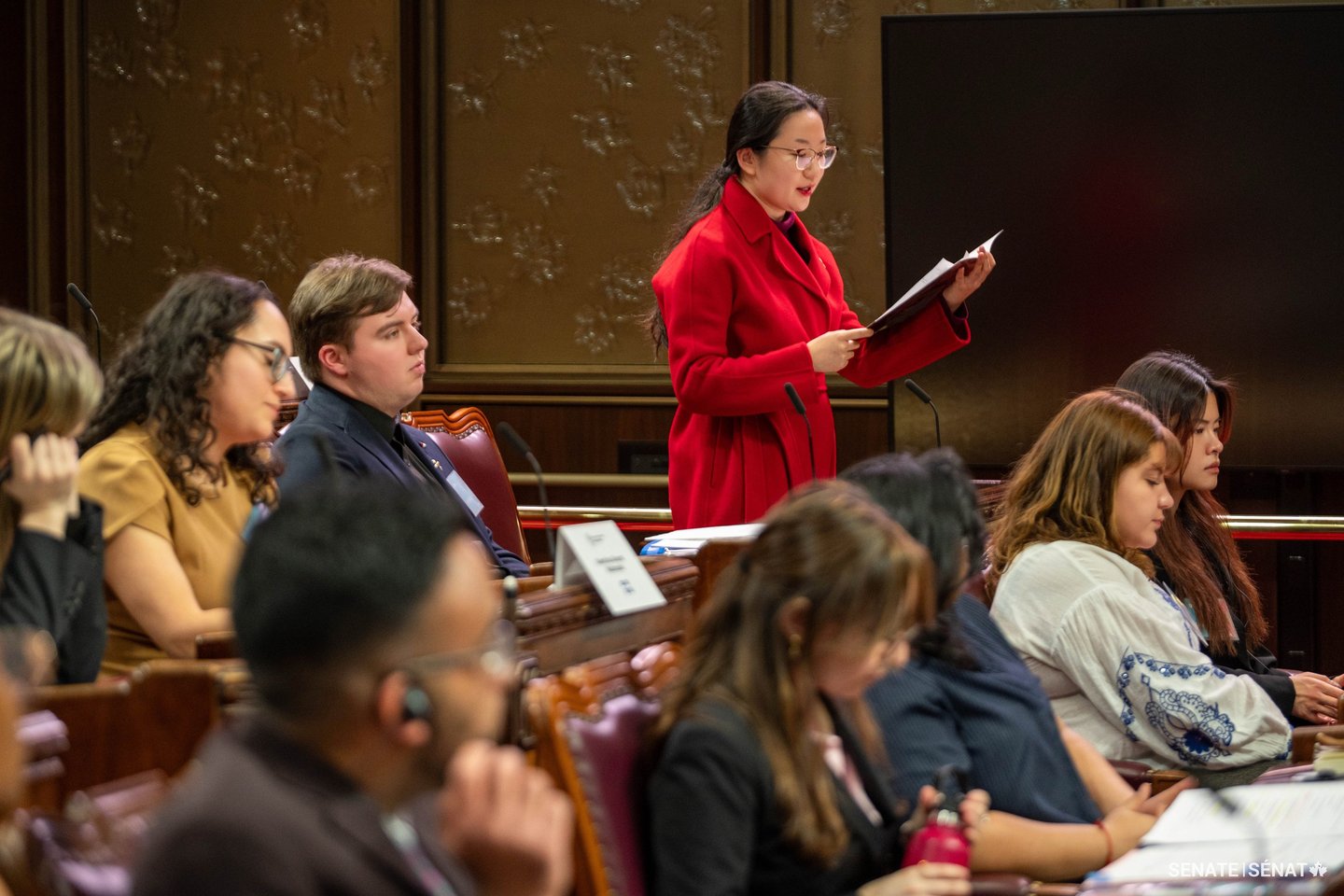
As a Model Senator in the Senate of Canada, Simone debated legislation in the Red Chamber, engaged with Canadian senators on democratic governance, reconciliation, and public leadership, and delivered the closing vote of thanks to Senator Farah Mohamed, bringing her research on democratic theory, constitutionalism, and multiculturalism into parliamentary dialogue.
Explore Simone's work in the Senate, including her advocacy, parliamentary debates, and full speech.
Serial Founder
Simone founded several startups, including Adastra Consulting, before initiating a market expansion plan as a Marketing Manager at a 20-year CPG company for US-Canada trade. She later incorporated her own company. She holds a CORe certificate from Harvard Business School. As a Goldman Sachs 10,000 Women Alumna, Simone mentored at The Forum and engaged with the Harvard Innovation Lab, HBS Alumni Angels Association, and Harvard Alumni Entrepreneurs.
Poet
Simone has been writing poetry in the Classical style since 12. She won prizes for her outstanding knowledge of Chinese Classical Studies in a national TV competition and, at 15, received scholarships awarded by a scholarly selection committee composed of professors from prestigious universities. Read Simone's poems.
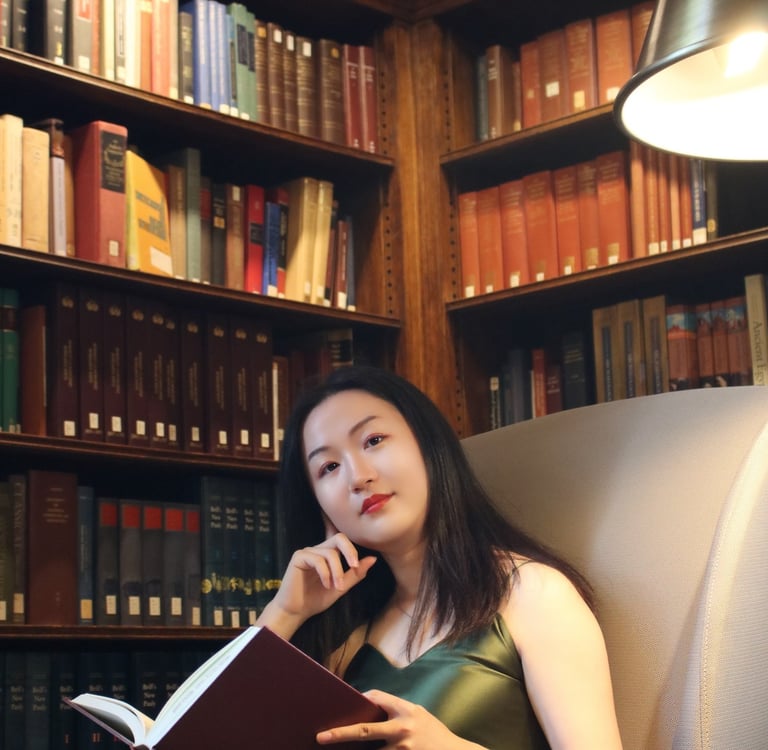


My vision is...
A future ahead in which people from different cultures, traditions, religions, and ways of life can live together peacefully in an increasingly plural, heterogeneous (multicultural, multi-ethnic), and interconnected world.
My work is ...
How can it be possible? What makes it possible? In what sense, and to what extent?
“Given the opportunity, with the necessary conditions created, civilizations do not inevitably clash.”
If I had an hour to solve a problem and my life depended on the solution, I would spend the first 55 minutes determining the proper question to ask, for once I knew the proper question, I could solve the problem in less than five minutes.
“I walk slowly, but I never walk backward.”
Abraham Lincoln
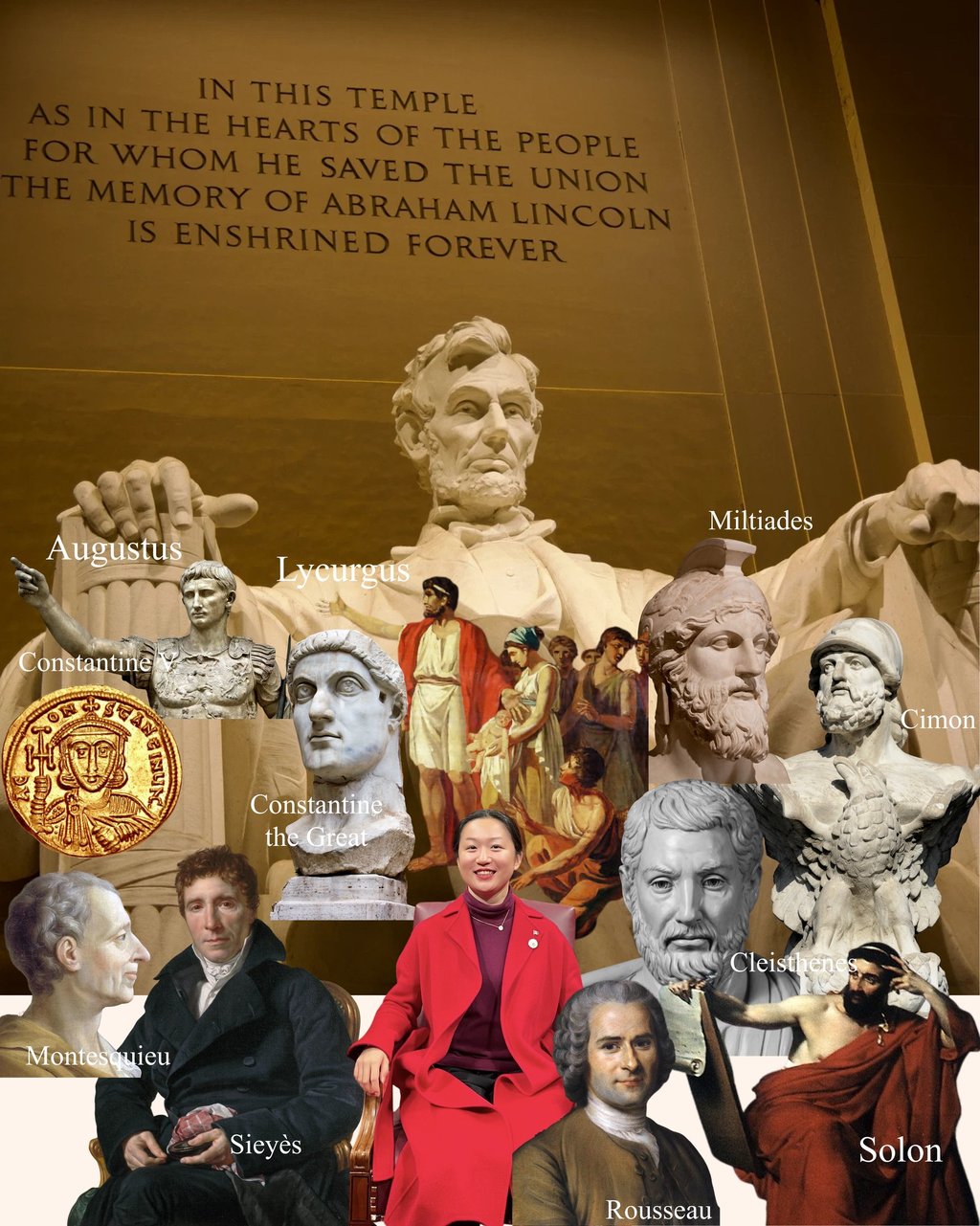
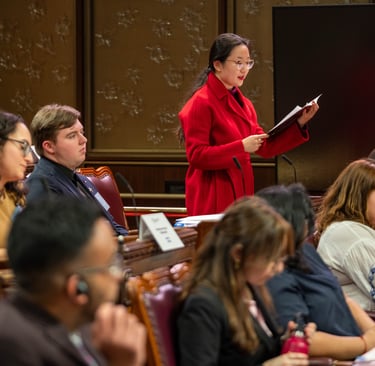
I bring to the Red Chamber a unique perspective shaped by intellectual origins, history, idealism, global migration, and an enduring commitment to democratic institutions. This is where my decade-long journey of searching for a truth that I can believe in (one uniquely my own that I am developing and haven't articulated well yet as a political theorist in the making, one free from inherited assumptions, popular narratives, or intellectual projections) has guided me. Learn more about Simone's work in the Senate and read her speeches.
“𝐓𝐞𝐥𝐥 𝐭𝐡𝐞 𝐰𝐨𝐫𝐥𝐝 𝐭𝐡𝐚𝐭 𝐰𝐡𝐨 𝐚 𝐩𝐞𝐫𝐬𝐨𝐧 𝐜𝐚𝐧 𝐛𝐞𝐜𝐨𝐦𝐞 𝐢𝐬 𝐧𝐨𝐭 𝐝𝐞𝐭𝐞𝐫𝐦𝐢𝐧𝐞𝐝 𝐛𝐲 𝐰𝐡𝐞𝐫𝐞 𝐭𝐡𝐞𝐲 𝐰𝐞𝐫𝐞 𝐛𝐨𝐫𝐧. 𝐌𝐲 𝐯𝐢𝐬𝐢𝐨𝐧 𝐢𝐬 𝐧𝐞𝐯𝐞𝐫 𝐜𝐨𝐧𝐟𝐢𝐧𝐞𝐝 𝐛𝐲 𝐭𝐡𝐞 𝐬𝐩𝐚𝐭𝐢𝐨-𝐭𝐞𝐦𝐩𝐨𝐫𝐚𝐥 𝐜𝐨𝐨𝐫𝐝𝐢𝐧𝐚𝐭𝐞𝐬, 𝐣𝐮𝐬𝐭 𝐚𝐬 𝐦𝐲 𝐦𝐢𝐧𝐝 𝐢𝐬 𝐧𝐞𝐯𝐞𝐫 𝐝𝐞𝐟𝐢𝐧𝐞𝐝 𝐛𝐲 𝐰𝐡𝐞𝐫𝐞 𝐈 𝐜𝐨𝐦𝐞 𝐟𝐫𝐨𝐦. 𝐓𝐡𝐢𝐬 𝐢𝐬 𝐰𝐡𝐞𝐫𝐞 𝐭𝐡𝐞 𝐠𝐫𝐞𝐚𝐭𝐧𝐞𝐬𝐬 𝐨𝐟 𝐂𝐚𝐧𝐚𝐝𝐚 𝐥𝐢𝐞𝐬.”
Simone Mao
A forerunner of constitutional government and democracy in the 21st century. A political theorist and a philosopher in the making. A proud Canadian.
I bring to the Red Chamber a unique perspective shaped by intellectual origins, history, idealism, global migration, and an enduring commitment to democratic institutions. This is where my decade-long journey of searching for a truth that I can believe in (one uniquely my own that I am developing and haven't articulated well yet as a political theorist in the making, one free from inherited assumptions, popular narratives, or intellectual projections) has guided me. Learn more about Simone's work in the Senate and read her speeches.
An award-winning political theorist at Harvard University, I study comparative constitutional theories and political philosophy. I focus on how legislation and political action reconcile fundamental principles with the practical demands of governance and institutional design. My research examines how constitutional ideas are upheld, adapted, and contested through real-world practices, reshaping governance mechanisms and addressing contemporary institutional challenges.
I have long admired the Enlightenment and the Age of Revolution for establishing representative governments founded upon written constitutions on both sides of the Atlantic. Determined to understand their intellectual foundations, I traveled to Rome to pursue my own classical education. I left my family in China behind in pursuit of philosophy, freedom, an open society, and democratic ideals. The sacrifices I made along the way and my experiences of exclusion in Europe deepened my commitment to democracy, equality, non-discrimination, and inclusion. I have since pursued that commitment both in practice—in Canada and at UNESCO—and in scholarship at Harvard.
As a first-generation woman in politics and a proud Canadian, I have been active in electoral politics, interned in parliamentary offices, and represented Ontario as a Model Senator in the Senate of Canada, which marks where my decade-long pursuit of democratic ideals has guided me and reinforced my commitment to democratic resilience, institutional excellence, and civil discourse.
Harvard scholarship has cultivated and fundamentally reshaped my worldview. Coming from an authoritarian society means having to search for democracy from first principles: through classical legacies, the Enlightenment, and the lived representative democratic practices. It leads me back to fundamental questions and deeper appreciation and insights: What defines a democracy? Why do some democracies endure while others collapse? Having experienced the absence of freedom, I am often more attuned to the subtle ways democratic institutions can be weakened, and more sensitive to the conditions necessary for preserving them. This perspective has deepened my appreciation and insights into its fragility, acutely aware of what makes a democracy resilient. Taking newly established yet well-functioning democracies as an example, precisely because their democracy is relatively young, their people are often more sensitive to the conditions necessary for safeguarding the hard-won human rights and institutions.
I firmly believe that robust, effective institutions and institutional continuity are essential to a resilient and healthy democracy.
Once an eagle is driven from the comfort of its nest, it does not mourn what it has lost. It claims the boundless sky as its home, riding the winds that were always meant to carry it—and soars.
The tension between the closed world of local social events and the open stage of world history ultimately pushes those destined for the wider world onto that larger stage.
My life is, and always will be, a testament to the vision that identity is not destiny but an act of authorship; that ethnonationalism belongs to a nineteenth-century conception relics of world and identity, and nation-states are transient compared to the progress of humanity and our shared historical destiny that are far greater than the boundaries that divide us; and that appearance, origin, and ethnicity may shape how others perceive us, but they can never imprison an independent mind.
Simone is living proof that no stereotype can contain an independent mind. She lives by principles of her own making, writes her own path, and refuses to let inherited categories define who she is.
Simone is simply ahead of her time.
Her ideas belong to the future more than to the present.
I am the legislator of my own life and my own thoughts. I govern my own life according to principles I have chosen. How I choose to live is mine alone. Your judgments do not constitute my law. It is neither your concern nor your authority to decide. Please don’t judge, measure, or evaluate me by a worldview I do NOT share. 我和你們本來就不一樣。
Ongoing Projects
My recent projects consist of four parts:
Multiculturalism Project: Examining nationalism, global citizenship, ethnicity, and migration within political philosophy, focusing on Canadian policies.
Rousseau Project: Exploring the theory and history of political thought.
Philosophy Project: Engaging in pure philosophical inquiry.
Public Policy and Practicality Project: Responding to real-world societal issues.
Advocating for Change
Simone's Commitment to Global Peace, Immigration, Housing, Women Empowerment, Diversity, Equity, and Justice.
It's not just about talking the talk; it's about walking the walk. Every day, we live by our principles, striving for a better world for all.
Inquire. Investigate. Evolve.
Curiosity Sparks Reality.
Copyright © 202& Simone Zhenting Mao. All rights reserved.
The troops exulting sat in order round,
And beaming fires illumined all the ground.
As when the moon, refulgent lamp of night,
O’er heaven’s pure azure spreads her sacred light,
When not a breath disturbs the deep serene,
And not a cloud o’ercasts the solemn scene,
Around her throne the vivid planets roll,
And stars unnumber’d gild the glowing pole,
O’er the dark trees a yellower verdure shed,
And tip with silver every mountain’s head:
Then shine the vales, the rocks in prospect rise,
A flood of glory bursts from all the skies:
The conscious swains, rejoicing in the sight,
Eye the blue vault, and bless the useful light.
So many flames before proud Ilion blaze,
And lighten glimmering Xanthus with their rays.
The long reflections of the distant fires
Gleam on the walls, and tremble on the spires.
A thousand piles the dusky horrors gild,
And shoot a shady lustre o’er the field.
Full fifty guards each flaming pile attend,
Whose umber’d arms, by fits, thick flashes send,
Loud neigh the coursers o’er their heaps of corn,
And ardent warriors wait the rising morn.