


It is the second chapter of the story that holds greater significance, for while the first is about death and negation, the second is about life and meaning.
Chapter Two
Homo liber de nulla re minus quam de morte cogitat et ejus sapientia non mortis sed vitae meditatio est. — Spinoza, E4: PROP. 67.
“A free man thinks of death least of all things; and his wisdom is a meditation not of death but of life.”
My political mentor, Eleni, was born in Argos, Greece, and served as a Member of Parliament in Canada for thirteen years. Prior to that, she spent nearly two decades in public service within the Quebec provincial legislature. She was the first Greek-Canadian elected to Parliament, and also the first Greek-Canadian woman to serve as Parliamentary Secretary to Ministers (equivalent to Deputy Minister for people unfamiliar with the Westminster system) and Assistant Deputy Speaker. She became a source of immense pride for the Greek community (which at the time numbered only 5,000 people) and was a true trailblazer. When she cast her vote in favor of legalizing same-sex marriage in Canada, she was excommunicated by the Greek Orthodox Church. This deeply shocked me and reminded me of Spinoza. Her first job was as an advisor to the Quebec Minister for Immigration and Multiculturalism.
While studying in Europe, I faced severe xenophobia, discrimination, and even physical attacks during the pandemic, no accommodation for my conditions, which ultimately led to my forced transfer to Harvard. This experience has shaped my wish to ensure that others do not encounter similar challenges and that social governance does not deteriorate to such an extent. I believe that as an entrepreneur, you can help thousands, maybe even millions. As a politician, you can impact hundreds of millions. But as a thinker, you don’t just help this generation—you help countless future generations.
I appreciate the life challenges I conquered and my commitment despite the setbacks because without them, I wouldn’t be the one I am today (it is because—the challenges I have faced were not of my own making but from the social environment of that difficult and burdensome time. Yet, it is because of these challenges that I met my husband; because I once experienced racial discrimination and harm in Europe, I became unwavering in my commitment to multiculturalism; because the pandemic made life even harder for many people, I chose to study economics and was dedicated to public service; and because I’ve encountered hardships that many others have not, I can identify more clearly the flaws in the policy and manage overlooked risks, helping to avoid even greater challenges to individuals already disadvantaged by the system, before a crisis escalates. At one point, fate nearly crushed me—during the most difficult period of my life, I didn’t even have a stable desk to study at. But it is precisely because of these struggles that I’m profoundly grateful to still be able to pursue my dreams and make a meaningful impact in these fields.
I once studied the history of European religious wars and ethnic policies, and Alexandria and Rome as ancient multi-ethnic cosmopolitan cities. Before I became a Canadian citizen, I found myself deeply aligned with these ideals (such as accommodation rather than assimilation)—which is my philosophical vision. I plan to explore this theme—it speaks to how people can live together in harmony, how diverse values can coexist, and the living and spiritual realities of a world shaped by multiple deities (multi-deus) and civilizations—in my PhD application, with a purely philosophical approach. I believe that when completed, very few in the world will fully grasp its content. You can read a short article if you’d like, or a longer and more abstract one.
When I spoke to Eleni about my current predicament, the clash between my ideals and the present-day challenges, she said, “Society will change with time”—much like how she was excommunicated from the Church, yet a few years later, the Greek Prime Minister legalised same-sex marriage, and her excommunication was revoked. “Your community will be proud of you.”
In the past, I doubted whether my community would truly take pride in me. After all, throughout my journey, I have shouldered the immense burden of underacknowledgement from society. Few persist when the path becomes more arduous, when rewards and recognition seem even more elusive. Such perseverance can feel akin to a Stoic renunciation—“to love God, yet not hope for God’s return of love” (Spinoza). But after one achievement after another, now, I believe that I can become the pride of certain communities, not all communities, but those of which I, too, recognize myself as a part.
Eleni, though she did not complete her JD at McGill due to her dedication to public service, later surrounded herself with legal experts and professionals when she became Deputy Minister. Not specific legal knowledge; what she needed was keen judgement, and the ability to make decisions that served the common good.
In the context of the university system, I have become more at ease with the idea of possessing or not possessing the highest educational credentials. However, by nature, I have a passion for research, unwavering. I am driven to contribute to the grand edifice of human knowledge, dedicating myself to its advancement. For me, the choice to attend Harvard was not driven by the prestige of the institution, but by the opportunity to work with mentors who can understand me well. Only the best institutions can offer a free and tolerant environment, which is essential for an inquisitive heart. The narrative of elitism pales in comparison to the good and attraction of being guided by a great teacher—especially for someone like me. As the Zhan Guo Ce states: “The emperor associates with his teachers, the king with his friends, the hegemon with his ministers, and the vanquished with their subjugated.” A teacher who imparts wisdom and guidance can help me achieve my dream of “discovering the true essence of the heavens and earth, establishing the mission for the people, carrying forward the wisdom of the ancients, and paving the way for peace and prosperity for all generations.”
My undergraduate years have not been particularly long. Before encountering Russell, Wittgenstein endured nine years of depression, teetering on the edge of suicide. As for me, the emptiness and pain caused by a lack of faith—what I have personally perceived and experienced is the kind of void that is unique to the spiritual condition of our era, from what I precisely suffered—lasted for seven years. Even by the time he published the Tractatus Logico-Philosophicus and became one of Europe’s most renowned philosophers, he had not yet completed his undergraduate degree. During that period, he left Cambridge and joined the army in World War I, contemplating God in the trenches. It was Russell who suggested he submit the Tractatus as his doctoral thesis. After his defence, Wittgenstein told his examiners that they would not understand it. Indeed, they said its quality far exceeded the standards of a PhD dissertation. It took him 18 years to graduate.
One could easily refute today’s shallow trends, the obsession with mere diplomas, and the concept of meritocracy in one word: Lincoln had no college degree, nor did Truman or Washington. Leadership is not defined by titles, but by the recognition and respect earned through one’s actions, character, and contributions.
Erdogan holds no degree (though I see him more as an opponent in political philosophy, for that type of political system and ideology, Majoritarian Nationalism, characterized by non-secularism and theocratic governance, stands in stark contrast to Multiculturalism, which represents a form of Pluralistic Nationalism), but we both, in our youth, immersed ourselves in sacred texts. Naturally no because his mission stands in opposition to the so-called Western university system, ideology, and agenda—that is, as he believes, to restore the ancient laws of God for his people. I mention these individuals only to illustrate a kind of “archetype”.
My life today is one I cherish. Many of my peers are wonderful, and my political colleagues are like-minded people. When I speak about political philosophy, Greek and Roman thought, they understand me. They see me as one of their own, someone who can contribute to the governance of Canada. We belong to Canada’s future—a future shaped by the contributions of diverse groups, fostering inclusive prosperity. Canada is not a nation of ethnic nationalism, for it is a country founded on immigration, built upon civic principles of liberty, equality, and liberal democracy. Multiculturalism is its national official policy. As Charles Taylor’s concept of “politics of recognition” profoundly argues, different ethnic groups seek not just equality but recognition of their culture, customs, and communities—many historical grievances stem from a lack of recognition or outright discrimination.
My vision is not defined by the place of my birth. Cosmopolitanism is especially evident in me. In a time when many noble values are being tested, I feel especially compelled to mention and emphasize these things. Challenges lie ahead, but I believe—and am confident—that we can overcome any obstacle and preserve the light for the perhaps impending dark ages.
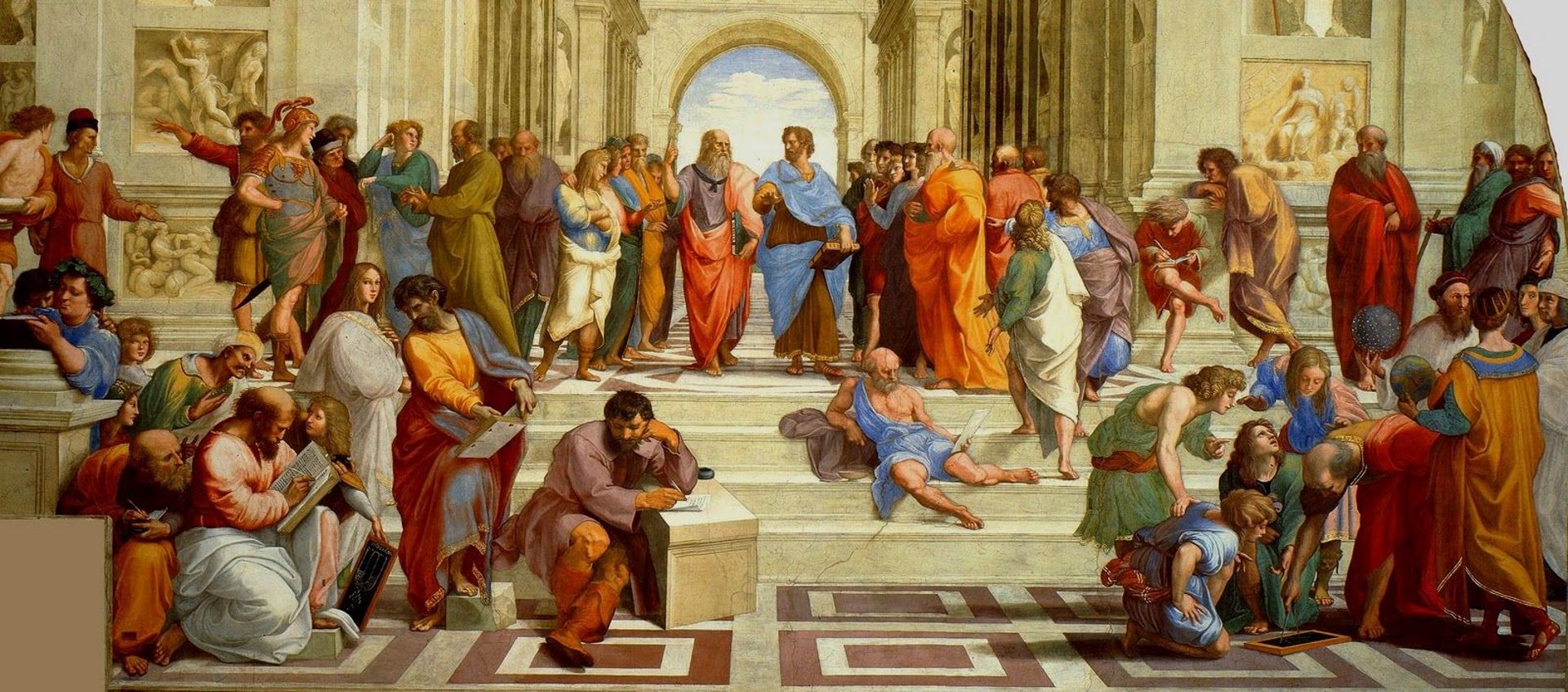
“The first twenty years of my life were a reflection of what Spinoza described as a sorrowful, meaningless meditation on death—a period when nihilism clouded my worldview, and I wandered in search of truth, lost in a vast ocean without a single piece of land in sight.
Yet today, the narrative of my life has been beautifully rewritten: it has transformed into a hymn to life, a meditation on existence. I have undergone a full cycle of death and rebirth, rising anew from the ashes—a resurrection of the soul. In my heart, I have not only become but also learned to cherish the title of a ‘free person’. The vision of a more inclusive and prosperous world never ceases to motivate me from within.
Spinoza, in his lifetime, was never able to achieve freedom in the physical, worldly sense, nor in thought or speech within a society of his age. But I stand unapologetically before heaven and earth, true to my own soul. I will be a truly free soul, walking freely throughout the world, beneath the vast heavens, and before the tribunal of my own conscience, all while I am alive.”
— Also sprach Simone
Inquire. Investigate. Evolve.
Curiosity Sparks Reality.
Copyright © 202& Simone Zhenting Mao. All rights reserved.
The troops exulting sat in order round,
And beaming fires illumined all the ground.
As when the moon, refulgent lamp of night,
O’er heaven’s pure azure spreads her sacred light,
When not a breath disturbs the deep serene,
And not a cloud o’ercasts the solemn scene,
Around her throne the vivid planets roll,
And stars unnumber’d gild the glowing pole,
O’er the dark trees a yellower verdure shed,
And tip with silver every mountain’s head:
Then shine the vales, the rocks in prospect rise,
A flood of glory bursts from all the skies:
The conscious swains, rejoicing in the sight,
Eye the blue vault, and bless the useful light.
So many flames before proud Ilion blaze,
And lighten glimmering Xanthus with their rays.
The long reflections of the distant fires
Gleam on the walls, and tremble on the spires.
A thousand piles the dusky horrors gild,
And shoot a shady lustre o’er the field.
Full fifty guards each flaming pile attend,
Whose umber’d arms, by fits, thick flashes send,
Loud neigh the coursers o’er their heaps of corn,
And ardent warriors wait the rising morn.